
THE WEIGHT
Start light enough to walk normally. A full-size cinder block isn't the right starting load for everyone.
MANAGEABLE BEATS MAXIMUM
RUCKING 101 / START HERE
Rucking is walking with added weight. Simple concept. Serious work. Here's what you actually need to know before your first loaded walk.
PLAN YOUR FIRST RUCK ↓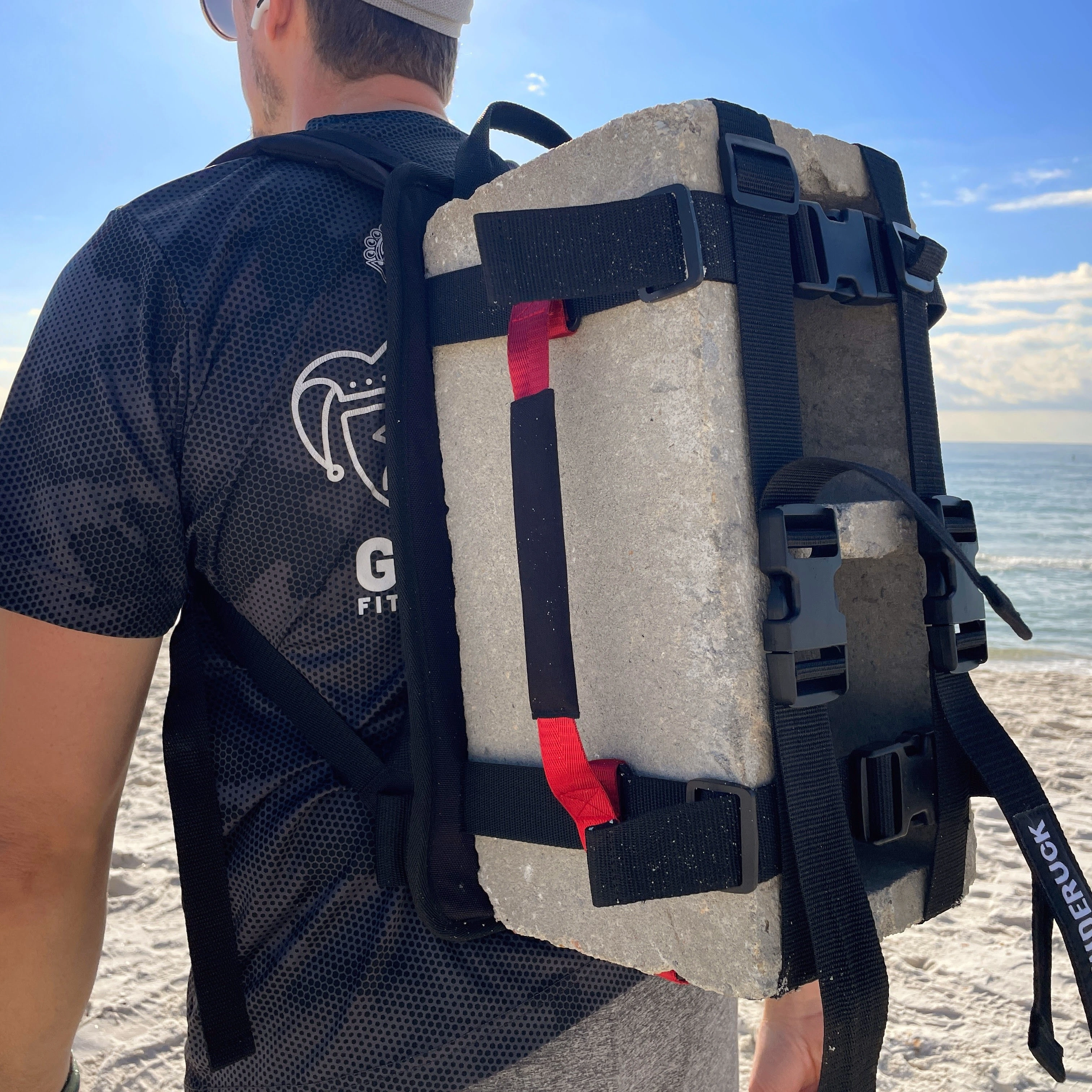
THE WHOLE IDEA
Put a secure, manageable weight in a comfortable backpack. Walk. Build strength and endurance over time.
That's rucking.YOUR FIRST OUTING
Skip complicated programs. Get these fundamentals right, then get outside.
Start light enough to walk normally. A full-size cinder block isn't the right starting load for everyone.
Secure the load so it cannot shift. Adjust the straps for a stable, comfortable fit.
Choose a short, familiar, relatively flat path. Keep a pace where you can still talk.
Stop if you feel pain, lose good posture, or notice the load moving. Adjust before continuing.
New to regular walking? Build that habit first. Loaded walking adds stress—there's no prize for starting too heavy.
A PLAN YOU CAN USE
An example for someone already comfortable walking—not a universal target. Adjust the time and load to your ability.
Start with a light, securely packed weight. Walk around briefly. You should be able to maintain your normal posture and stride.
Keep the weight close to your back. Adjust both shoulder straps evenly and check for bouncing, rubbing, or pressure points. Wear comfortable walking shoes.
Choose a flat, familiar route at a conversational pace. If you already walk regularly, roughly 10–15 minutes may be a useful trial; shorter is fine.
Finish before your form deteriorates. Notice how you feel afterward and the next day. Repeat a comfortable outing before adding difficulty.
Stop for pain, numbness, dizziness, or a shifting load. If you're unsure whether loaded walking is appropriate for you, seek individualized medical guidance.
THE NEXT FEW RUCKS
When your current ruck feels comfortable and repeatable, improve one thing at a time.
Build a repeatable walking routine.
Add a bit of time or distance when ready.
Only then consider more weight, hills, or pace.
A sample progression: repeat a comfortable short outing for your first few sessions. When it feels easy and recovery is good, add a little time on a later walk while keeping the weight the same. Only then consider hills, pace, or a heavier load. There is no deadline—repeat or reduce a step as needed. Don't increase weight, distance, speed, and hills all at once. Allow recovery between demanding sessions.
WHEN YOU'RE READY
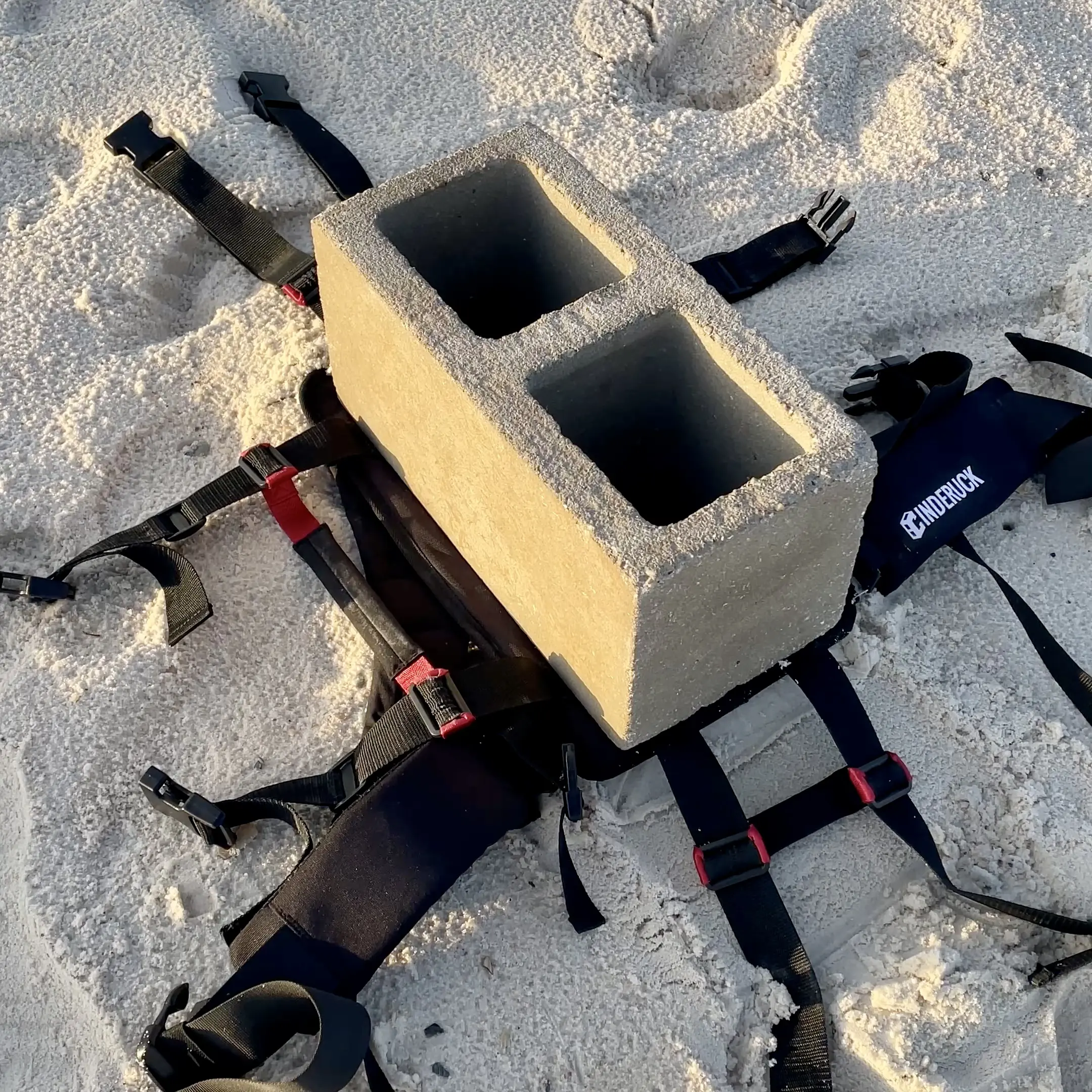
You don't need a cinder block to start rucking. Start with a stable weight suited to your ability. Once you're ready for block-based training, CINDERUCK is designed for blocks with a standard 8 × 16-inch base.
STILL HAVE QUESTIONS?
The details when you need them. No wall of text.
Use a load that allows normal posture, a comfortable walking stride, and no pain. There isn't one safe starting weight or body-weight percentage for everyone. If a cinder block feels too heavy, start with a lighter, securely packed load.
Keep it short enough to finish without straining. If you're already comfortable walking, 10–15 minutes on a flat route can be a reasonable first trial; shorter is fine. Choose an easy turnaround and add time gradually as you recover and adapt.
Easy walking can be frequent, but carrying extra weight increases demands on your body. Adapt your frequency to your load, fitness, and recovery. Don't push through pain.
They overlap. Rucking emphasizes carrying an intentional load while walking; hiking often emphasizes trail terrain or destinations. You can ruck on a sidewalk, path, or suitable trail.
Once your loaded walks are controlled and comfortable, explore movements appropriate for your equipment and experience. See the hybrid workout guide for how CINDERUCK WOD works.
READY FOR WHAT'S NEXT?
Start with the walk. Build the habit. When you're ready for more, bring the workout.